Modern utility projects require project certification


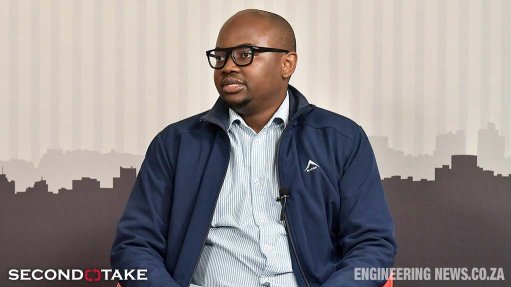
Modern integrated projects are posing a challenge, when it comes to certification. So highlighted accredited certification body Conformity International South Africa director Igor Djurdjevic in a presentation at the Enlit Africa 2026 conference, at the Cape Town International Convention Centre, on Thursday.
"Certification is a conformity assessment process to ensure technical risks are mitigated by verification against standards," he defined. "It is usually the most complete form of conformity assessment. It can be done on systems, products and projects."
Project certification was new. It could be done, and had been done, especially with wind power projects around the world. There was increasing demand for it.
Executing certification involved evaluation, review, testing, and then decision. Certification usually required annual audits, but in some areas, such as medical or nuclear, the frequency was greater.
(Accreditation was what was awarded, by national accreditation agencies, to certification bodies, allowing them to undertake certification. Both accreditation and certification bodies had their own international associations.)
The modern challenge to certification bodies was the emergence of projects in which certification had to go beyond their various component products and systems. There had to be a focus on the overall project, from an assessment of the project design, then of the products that would be used to create the system, then of the equipment when it was installed, on to the overall performance of the complete system. This process required the use of experts at every stage.
Djurdjevic pointed out that the IECRE (International Electrical Commission Renewable Energy) encouraged such an approach and provided an accreditation system for certification bodies to provide certification to entire projects. Of course, IECRE accreditation was focused on allowing the certification of renewable-energy projects.
As previously mentioned, this approach had been successfully implemented, especially with wind farms in north-west Europe. But, he noted, it was also applicable to many other utility projects, including solar power and water, as well as smaller-scale industrial projects.
While the wind sector had rapidly taken up this new approach, its adoption by the solar sector had, he reported, been very slow. He theorised that this might be because of the numerous wind projects located in the more strictly regulated European markets.
The systems certification approach had a number of advantages. These included having only one body providing full conformity assessment requirements for the entire project; the provision of a full understanding of conformity assessment and quality assurance by the service provider to the project owner; the ability to understand all the product and system requirements related to the project while assessing its individual components; and, it was legally more robust, with only one responsible quality assurer.
"Of course, there are [also] disadvantages," he observed. For certification bodies, these included the necessity for the assessors to be speciality experts, and not generalists; and the need for broad expertise in multiple engineering and other fields. For the project developers, these included the limited number of certification bodies currently capable of executing project certification, and that the necessity for a broad range of specialised expertise could increase costs.
Article Enquiry
Email Article
Save Article
Feedback
To advertise email advertising@creamermedia.co.za or click here
Research Reports

Projects


Latest Multimedia

Latest News

Showroom

Complete range of security sealing solutions including security seals bags and labels.
VISIT SHOWROOM

Press Office
Announcements
What's On
Subscribe to improve your user experience...
Option 1 (equivalent of R125 a month):
Receive a weekly copy of Creamer Media's Engineering News & Mining Weekly magazine
(print copy for those in South Africa and e-magazine for those outside of South Africa)
Receive daily email newsletters
Access to full search results
Access archive of magazine back copies
Access to Projects in Progress
Access to ONE Research Report of your choice in PDF format
Option 2 (equivalent of R375 a month):
All benefits from Option 1
PLUS
Access to Creamer Media's Research Channel Africa for ALL Research Reports, in PDF format, on various industrial and mining sectors
including Electricity; Water; Energy Transition; Hydrogen; Roads, Rail and Ports; Coal; Gold; Platinum; Battery Metals; etc.
Already a subscriber?
Forgotten your password?
Receive weekly copy of Creamer Media's Engineering News & Mining Weekly magazine (print copy for those in South Africa and e-magazine for those outside of South Africa)
➕
Recieve daily email newsletters
➕
Access to full search results
➕
Access archive of magazine back copies
➕
Access to Projects in Progress
➕
Access to ONE Research Report of your choice in PDF format
RESEARCH CHANNEL AFRICA
R4500 (equivalent of R375 a month)
SUBSCRIBEAll benefits from Option 1
➕
Access to Creamer Media's Research Channel Africa for ALL Research Reports on various industrial and mining sectors, in PDF format, including on:
Electricity
➕
Water
➕
Energy Transition
➕
Hydrogen
➕
Roads, Rail and Ports
➕
Coal
➕
Gold
➕
Platinum
➕
Battery Metals
➕
etc.
Receive all benefits from Option 1 or Option 2 delivered to numerous people at your company
➕
Multiple User names and Passwords for simultaneous log-ins
➕
Intranet integration access to all in your organisation